
How Solar Security Cameras Operate

Updated: Jul 9
Security cameras have become a key part of protecting homes and businesses. With advances in technology, solar-powered security cameras offer a smart and eco-friendly way to keep an eye on your property without relying on traditional power sources. Understanding how these cameras work can help you decide if they are the right choice for your security needs.
How Solar Security Cameras Get Their Power
Solar security cameras use solar panels to capture sunlight and convert it into electricity. This electricity powers the camera and charges an internal battery. The battery stores energy so the camera can keep working even when the sun isn’t shining, such as at night or on cloudy days.
The solar panel is usually mounted near the camera, often on the same unit or nearby. It needs to be placed where it can get direct sunlight for most of the day. The size and quality of the solar panel affect how much energy it can produce. A larger panel or one made with efficient materials will generate more power.
The battery inside the camera is typically a rechargeable lithium-ion or lithium-polymer type. These batteries can hold enough charge to keep the camera running for several days without sunlight. This makes solar security cameras reliable even in less sunny climates.
How Solar Security Cameras Capture and Send Video
Once powered, the camera works like any other security camera. It uses a lens and image sensor to capture video footage. Many solar security cameras have motion detection features. When motion is detected, the camera starts recording or sends an alert to the owner.
The video can be stored locally on a memory card inside the camera or sent wirelessly to a cloud service or a smartphone app. Wireless transmission usually happens over Wi-Fi or cellular networks. This allows users to view live footage or recorded clips from anywhere.
Some solar security cameras also include night vision. Infrared LEDs light up the area in the dark without visible light, so the camera can record clear video at night.
Examples of Solar Security Cameras in Use
Two popular solar security cameras that show how this technology works in real life are the Ring Stick Up Cam Solar and the Reolink Argus 3 Pro.
The Ring Stick Up Cam Solar is a versatile camera that uses a solar panel to keep its battery charged. It offers 1080p HD video, two-way talk, and motion-activated notifications. The solar panel can be adjusted to catch the best sunlight, making it easy to install outdoors without worrying about wiring.
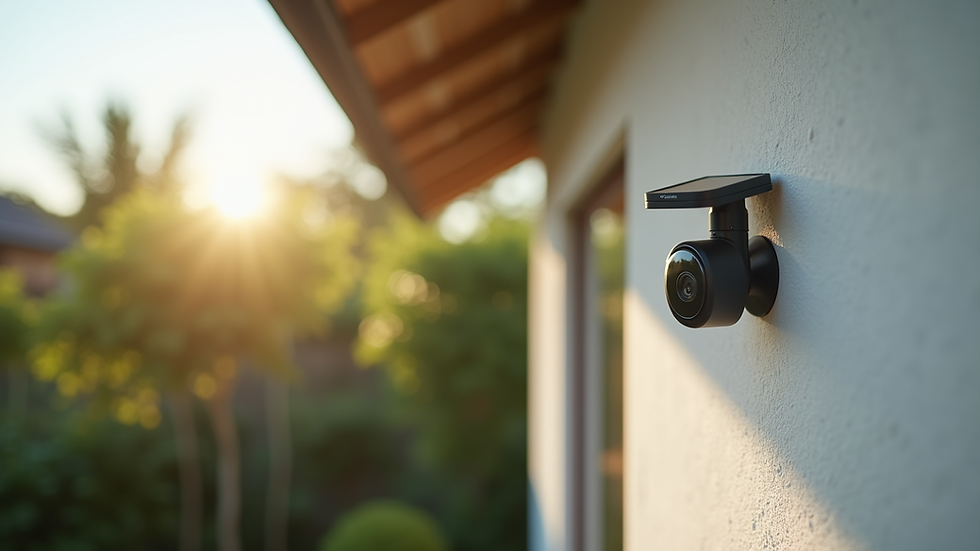
The Reolink Argus 3 Pro is another solar-powered camera with a built-in solar panel option. It features 2K video resolution, color night vision, and smart PIR motion detection. The camera can work completely wire-free, making it ideal for places without easy access to power outlets.
Both cameras highlight how solar power can make security systems more flexible and easier to install. They reduce the need for electrical wiring and lower energy costs.
Benefits of Using Solar Security Cameras
Solar security cameras offer several advantages over traditional wired cameras:
Easy installation: No need to run power cables, which saves time and money.
Energy savings: Solar power reduces electricity bills and reliance on the grid.
Environmentally friendly: Using renewable energy lowers carbon footprint.
Reliable backup power: Batteries keep cameras running during power outages.
Flexible placement: Can be installed in remote or off-grid locations.
These benefits make solar security cameras a good choice for many homeowners and businesses looking for a green and convenient security solution.
What to Consider When Choosing a Solar Security Camera
When picking a solar security camera, keep these factors in mind:
Solar panel size and placement: Make sure the panel can get enough sunlight daily.
Battery capacity: Larger batteries provide longer operation without sun.
Video quality: Look for HD or higher resolution for clear images.
Connectivity options: Wi-Fi or cellular support affects where you can place the camera.
Weather resistance: Cameras should be rated for outdoor use in your climate.
Storage options: Decide if you want local storage, cloud storage, or both.
By comparing products like the Ring Stick Up Cam Solar and Reolink Argus 3 Pro, you can find a camera that fits your needs and budget.

How to Maintain Solar Security Cameras
Maintaining solar security cameras is simple but important to keep them working well:
Clean the solar panel regularly to remove dust, dirt, or snow that can block sunlight.
Check battery health and replace batteries if they no longer hold a charge.
Update camera firmware to get the latest features and security patches.
Test camera connectivity to ensure it stays connected to your network.
Inspect mounting hardware to make sure the camera stays securely in place.
Regular maintenance helps extend the life of your solar security camera and ensures reliable performance.
Final Thoughts on Solar Security Cameras
Solar security cameras combine the benefits of renewable energy with modern surveillance technology. They offer a flexible, cost-effective way to protect your property without the hassle of wiring or high energy bills. Products like the Ring Stick Up Cam Solar and Reolink Argus 3 Pro show how these cameras can deliver clear video, smart alerts, and easy installation.
If you want a security system that works day and night, even during power outages, consider how solar security cameras operate and whether they fit your needs. With the right setup and care, they can provide peace of mind while helping the environment.
The Future of Solar Security Cameras
As technology advances, the future of solar security cameras looks promising. Innovations in battery technology and solar panel efficiency will likely enhance their performance. Expect to see cameras that can operate longer on less sunlight and provide even higher video quality.
Moreover, integration with smart home systems will become more common. This means solar security cameras will not only monitor your property but also interact with other devices. Imagine receiving alerts on your smartphone while your camera communicates with your smart lights to deter potential intruders.
Conclusion
In conclusion, solar security cameras represent a significant advancement in home and business security. They are not only eco-friendly but also offer a reliable and flexible solution for monitoring your property. With features like motion detection, night vision, and easy installation, they are becoming increasingly popular.
Investing in a solar security camera can provide peace of mind. As you explore your options, remember to consider factors like battery capacity, video quality, and connectivity. With the right choice, you can enhance your security while contributing to a sustainable future.


Comments